
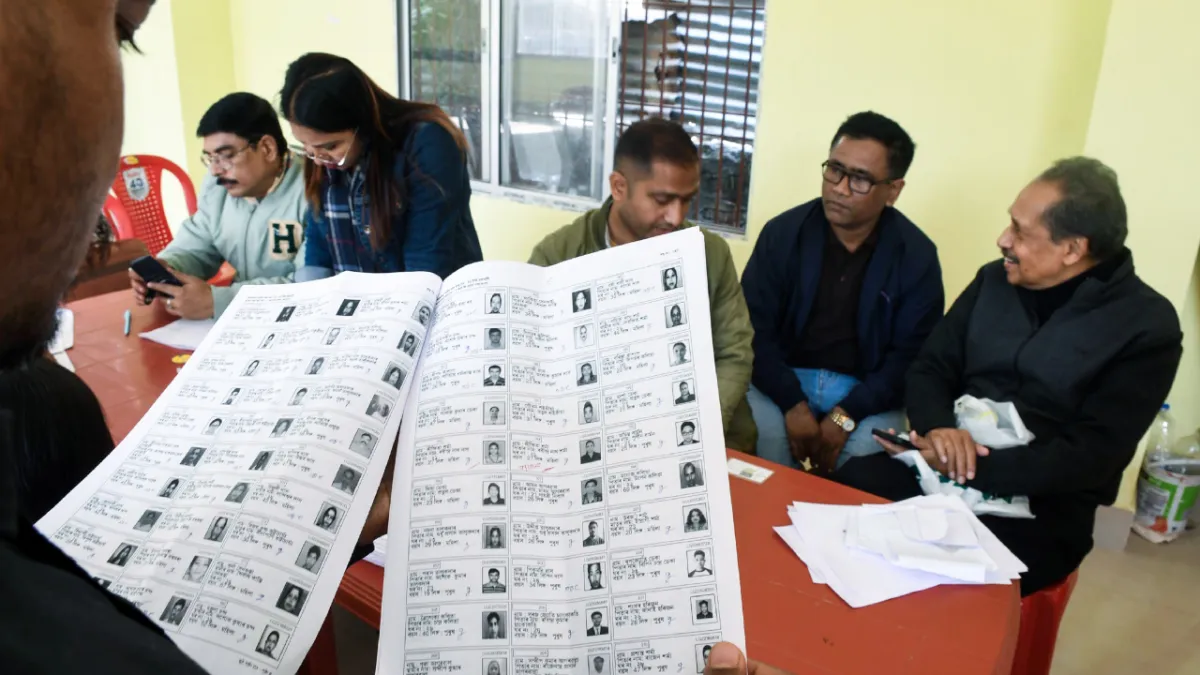
Amid controversy over the Special Intensive Revision (SIR) of electoral rolls and claims that the process is being centrally controlled, the Election Commission has issued a clarification on the functioning of its ECINET platform and the rules governing the SIR process.
The Election Commission said ECINET is a decentralised platform and has been developed in accordance with the Representation of the People Acts, 1950 and 1951, as well as directions issued by the poll panel from time to time.
According to the Commission, Booth Level Officers (BLOs), Assistant Electoral Registration Officers (AEROs), Electoral Registration Officers (EROs), District Election Officers (DEOs) and Chief Electoral Officers (CEOs) can perform their respective statutory functions on the platform using their unique IDs and passwords.
The Commission said no other person, including any other official of the Election Commission, can perform their statutory functions on their behalf.
The poll panel also said cybersecurity for ECINET is provided by the Election Commission to protect the platform from malicious hacking attempts. According to the Commission, there were around 68 lakh such attempts on the counting day of the assembly elections earlier this year.
EC's clarification on SIR
The Election Commission said it conducts the Special Intensive Revision under Section 21(3) of the Representation of the People Act, 1950, and stated that the exercise has been upheld by several courts.
The Commission said its SIR order for Bihar, dated June 24, 2025, was issued unanimously and included a provision requiring an additional declaration, or Annexure D, along with Form 6 in cases involving registration of a new voter or transfer of an elector from outside Bihar.
The same provision was subsequently included in the SIR order covering 12 states and Union Territories dated October 27, 2025, and again in the order dated May 14, 2026, covering 19 states and Union Territories. The Commission said all three decisions were taken unanimously.
Supreme Court reference
The Election Commission also referred to the Supreme Court's order in ADR vs ECI, Writ Petition No. 640/2025, dated May 27, 2026.
According to the Commission, the Supreme Court upheld the requirement that a new voter submit Form 6 along with the declaration contained in Annexure D. It also cited the court's observation that the SIR process was not directly inconsistent with the Representation of the People Act and the 1960 Rules, and did not depart from the constitutional requirement of free elections.
Annexure D
The Election Commission said that seeking Annexure D along with Form 6 was neither a new measure nor a decision taken independently by one official.
It maintained that the provision was included in three separate SIR orders, for Bihar, for 12 states and Union Territories, and subsequently for 19 states and Union Territories, and that all three orders were approved with the consent of all three Election Commissioners.
The Commission further said that the Supreme Court had also upheld the provision.
The clarification comes amid the wider controversy surrounding the SIR exercise and claims concerning the functioning of the Election Commission under Chief Election Commissioner Gyanesh Kumar.
Also Read:
Opposition to bring impeachment motion against CEC Gyanesh Kumar again as SIR row heats up
