
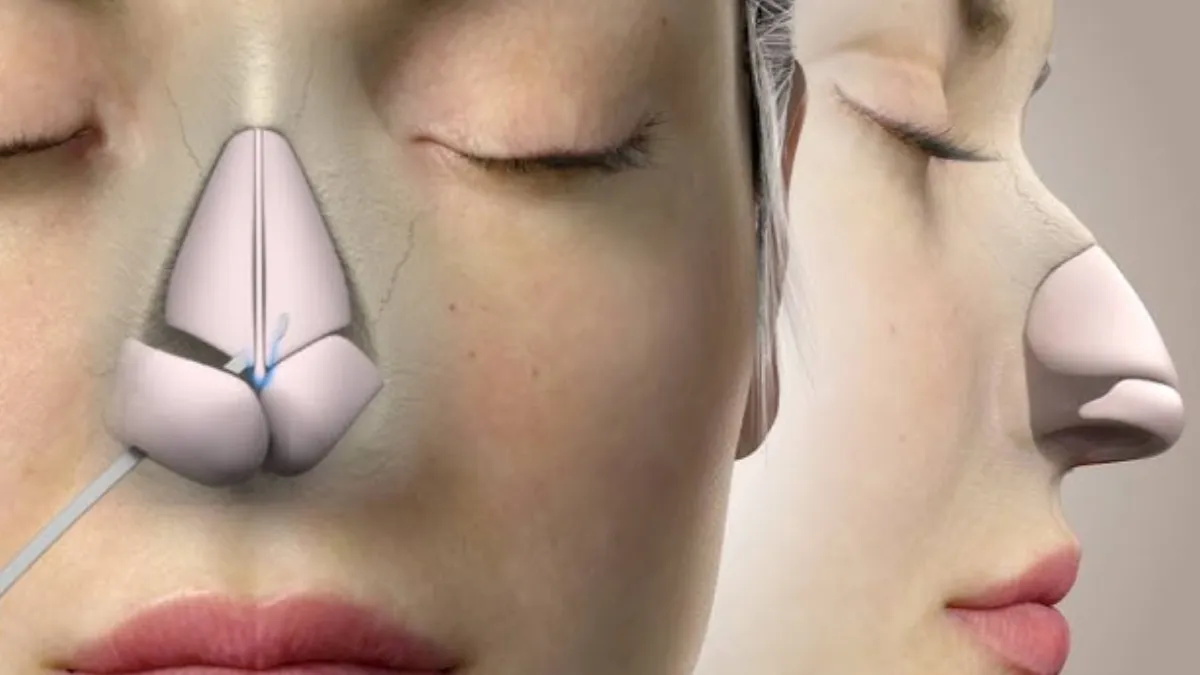
Rhinoplasty is a surgical process that is commonly known as a 'nose job' for reshaping or reconstructing the nose. Most of us think that rhinoplasty is used to address cosmetic concerns. Although it is often associated with celebrity changes, rhinoplasty fulfils a broad objective, not only cosmetic concerns but also the difficulties in breathing due to medical conditions such as structural abnormalities.
Dr. Rajat Gupta, a board-certified plastic surgeon and the National Secretary of the Indian Association of Aesthetic Plastic Surgeons (IAAPS) and a renowned expert in rhinoplasty, sheds light on the important aspects of this face-altering procedure. It's not always about achieving aesthetic perfection, for which an individual can opt for rhinoplasty. For many, the procedure is required to address functional issues such as a deviated septum, breathing problems, or nasal obstructions. For those who consider this for cosmetic purposes, it helps in refining nasal proportions, correcting asymmetry, or reducing a nasal hump.
According to Dr Gupta, “Rhinoplasty is not about creating a perfect nose but rather a nose that harmonises with the patient’s unique facial structure.”
Types of Rhinoplasties
- Open Rhinoplasty: A surgeon makes a cut at the nose's base to see better and work more precisely when reshaping is complex.
- Closed Rhinoplasty: A surgeon cuts inside the nostrils, leaving no visible; this works for minor changes.
- Revision Rhinoplasty: A second surgery to fix or improve the results of an earlier nose job.
- Functional Rhinoplasty: Also called rhino-septoplasty, this surgery aims to make breathing easier and fix structural problems.
- Aesthetic Rhinoplasty: This surgery tries to make the nose look better and more in proportion.
Celebrities and Rhinoplasty: Common Reasons and Results
Many famous people talk about getting nose jobs often to look better aesthetically or for functional corrections. A well-known Hollywood actress had surgery to slim down her nose bridge while keeping her natural looks. The nose job helped her face look more balanced. Another actress spoke about how a small change to her nose made it fit better with her other features. A top model from India said she had a nose job for both looks and health reasons. She told people that her surgery fixed a deviated septum inside her nose, which helped her breathe better.
The approach to Rhinoplasty
Rhinoplasty's success lies in individual planning and execution. It is important for surgeons to follow the patient-centred approach, starting with the patient's expectations, evaluating the structure of the nose, and designing a tailored surgical plan. Advanced imaging techniques and state-of-the-art techniques, such as using the piezotome for accuracy that don’t affect the surrounding tissue and bone structure, play an important role in achieving accurate results. Dr Gupta emphasises the importance of realistic expectations. "Surgery is a collaborative process. Clear communication about achievable outcomes and post-surgery recovery is very important for any surgeon & for patient satisfaction."
Key aspects of Rhinoplasty
- Customisation: Each procedure is tailored to the patient’s facial anatomy and goals.
- Recovery Process: Post-surgery care is essential for optimal results and healing.
Rhinoplasty isn't just for famous people; it's a surgical option chosen by folks from all backgrounds for various reasons, from fixing medical issues to improving looks. The method and type of rhinoplasty affect the desired outcome. Whether it's a small tweak or a big change, getting a balanced and natural result depends on skill, planning, and personalised care.
ALSO READ: Betel leaf can help reduce these 3 skin problems, know benefits of paan ka patta
